HNY Policy and Pathway Repository - North Yorkshire
Constipation and continence for school nurses and health visitors
Definition/Description
Promoting Continence Pathway: DIETARY ADVICE
•Diet alone is not an acceptable treatment for chronic constipation, but does play a part in treatment and is part of health promotion.
• Children/ young people should be encouraged to eat five or more portions of fruit and vegetables per day
• Children/ young people should not be encouraged to eat large amounts of high fibre foods as this can exacerbate constipation if fluid intake is inadequate.
• Children / young people should not be eating unprocessed bran.
• Whole grain cereals and brown bread and rice can be helpful and are part of a healthy diet.
• Children over the age of one year should not be having more than a pint of milk or its equivalent (yoghurts, fromage frais, cheese, custards, rice puddings etc) per day. This can exacerbate constipation, reduce appetite and prevent children from having a balanced, varied diet.
N.B. Please always follow any advice from the dietitian and ensure that the child does not have any foods to which they may have intolerances or allergies.
Promoting Continence Pathway: SYMPTOMS OF CONSTIPATION
Constipation in childhood is a common problem. For many it lasts only a few days but it can become chronic in up to a third of children and is a common reason for referral to secondary care. Chronic constipation is usually idiopathic (it happens spontaneously and/or the cause is not known). Symptoms vary between children and it is possible for children to be having a bowel motion most days, but to be constipated if they are only partially emptying the rectum.
Symptoms of constipation in children are:
• Infrequent bowel motions
• Unpleasant smelling wind or bowels motions
• Excessive flatulence
• Varying texture to bowel motions
• Withholding or appearing to strain to stop the passage of stools
• Soiling or overflow
• Bowel motions in sleep in children over a year in age
• Abdominal pain
• Abdominal distension
• Poor appetite, often improves after a large bowel motion
• Lethargy
• Unhappiness, anger or irritability that improves after a large bowel motion
NB. If the child is presenting as acutely unwell, has faltering growth or gross abdominal distension they should be reviewed by the GP or a paediatrician. (Constipation in Children and Young People NICE clinical guideline 99, 2010.)
Promoting Continence Pathway: TOILETING ADVICE
Encourage the child / young person to use the toilet regularly during the day. About two hourly is the correct interval for most. However, if the child / young person is wet more often than this, the interval should be shorter to try and ensure that they remain dry.
• Suggest that the child / young person uses the toilet after they have had a drink, as this can help with fluid intake as well.
• Ensure the toilet is easy to access, clean and well stocked with toilet paper etc. This is particularly important at school. Secondary school children may benefit from a toilet pass. Primary school children may need the teacher to know about the continence problem. Having a signal to indicate that the child is going to the toilet may be helpful, rather than them having to wait to ask to go.
• Ensure that smaller children have an insert seat and stool, so they are able to sit comfortably, well supported and with their feet on a firm surface.
• If the child / young person feel they need to pass urine urgently or suddenly, they may be encouraged to count to five and if the feeling goes away to wait until the next planned toilet visit. If the feeling remains or they are likely to wet if they do not toilet quickly, then they should go straight to the toilet.
• There is no evidence of benefit from trying to put off passing urine for longer than a few seconds if a child has urgency or day time wetting and this should not be encouraged.
• Children should be encouraged to remain at the toilet long enough to complete voiding.
• Children should be encouraged to sit on the toilet long enough to complete a bowel action. They should be able to sit privately. For children with constipation and soiling, there is often benefit from allowing them access to the disabled toilet in school as this is often more private than the main toilets.
• If the child is wetting /soiling at school it would be helpful to them to have spare clothes, wipes and plastic bags for the damp clothes, in their bag to allow changing as needed.
• Children should be supported to learn to change independently from about four years old. If they are wetting/soiling in school, they may need support with learning to change themselves initially, or until their dexterity is sufficiently good to manage alone.
• It is not normally acceptable for schools and nurseries to request parents attend to change children.
Red Flag Symptoms
Safeguarding: If there are any concerns about the wellbeing of the child or failure to progress, consider discussion with the continence service or safeguarding department as appropriate.
NB. If the child is presenting as acutely unwell, has faltering growth or gross abdominal distension they should be reviewed by the GP or a paediatrician.
Guidelines on Management
Promoting Continence Pathway: DIETARY ADVICE
• Diet alone is not an acceptable treatment for chronic constipation, but does play a part in treatment and is part of health promotion.
• Children/ young people should be encouraged to eat five or more portions of fruit and vegetables per day
• Children/ young people should not be encouraged to eat large amounts of high fibre foods as this can exacerbate constipation if fluid intake is inadequate.
• Children / young people should not be eating unprocessed bran.
• Whole grain cereals and brown bread and rice can be helpful and are part of a healthy diet.
• Children over the age of one year should not be having more than a pint of milk or its equivalent (yoghurts, fromage frais, cheese, custards, rice puddings etc) per day. This can exacerbate constipation, reduce appetite and prevent children from having a balanced, varied diet.
N.B. Please always follow any advice from the dietitian and ensure that the child does not have any foods to which they may have intolerances or allergies.
TOILETING ADVICE
• Encourage the child / young person to use the toilet regularly during the day. About two hourly is the correct interval for most. However, if the child / young person is wet more often than this, the interval should be shorter to try and ensure that they remain dry.
• Suggest that the child / young person uses the toilet after they have had a drink, as this can help with fluid intake as well.
• Ensure the toilet is easy to access, clean and well stocked with toilet paper etc. This is particularly important at school. Secondary school children may benefit from a toilet pass. Primary school children may need the teacher to know about the continence problem. Having a signal to indicate that the child is going to the toilet may be helpful, rather than them having to wait to ask to go.
• Ensure that smaller children have an insert seat and stool, so they are able to sit comfortably, well supported and with their feet on a firm surface.
• If the child / young person feel they need to pass urine urgently or suddenly, they may be encouraged to count to five and if the feeling goes away to wait until the next planned toilet visit. If the feeling remains or they are likely to wet if they do not toilet quickly, then they should go straight to the toilet.
• There is no evidence of benefit from trying to put off passing urine for longer than a few seconds if a child has urgency or day time wetting and this should not be encouraged.
• Children should be encouraged to remain at the toilet long enough to complete voiding.
• Children should be encouraged to sit on the toilet long enough to complete a bowel action. They should be able to sit privately. For children with constipation and soiling, there is often benefit from allowing them access to the disabled toilet in school as this is often more private than the main toilets.
• If the child is wetting /soiling at school it would be helpful to them to have spare clothes, wipes and plastic bags for the damp clothes, in their bag to allow changing as needed.
• Children should be supported to learn to change independently from about four years old. If they are wetting/soiling in school, they may need support with learning to change themselves initially, or until their dexterity is sufficiently good to manage alone.
• It is not normally acceptable for schools and nurseries to request parents attend to change children.
Referral Criteria/Information
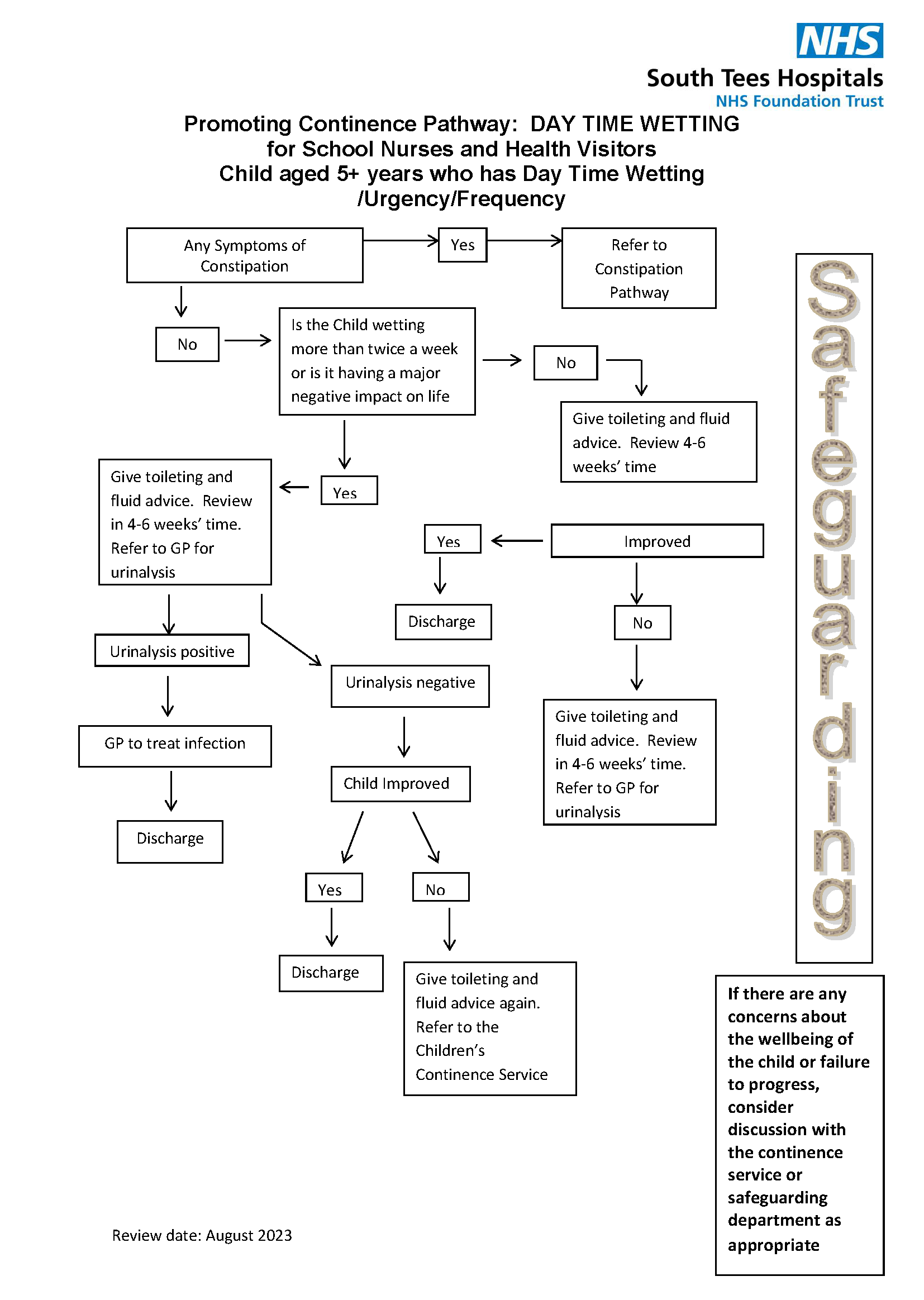
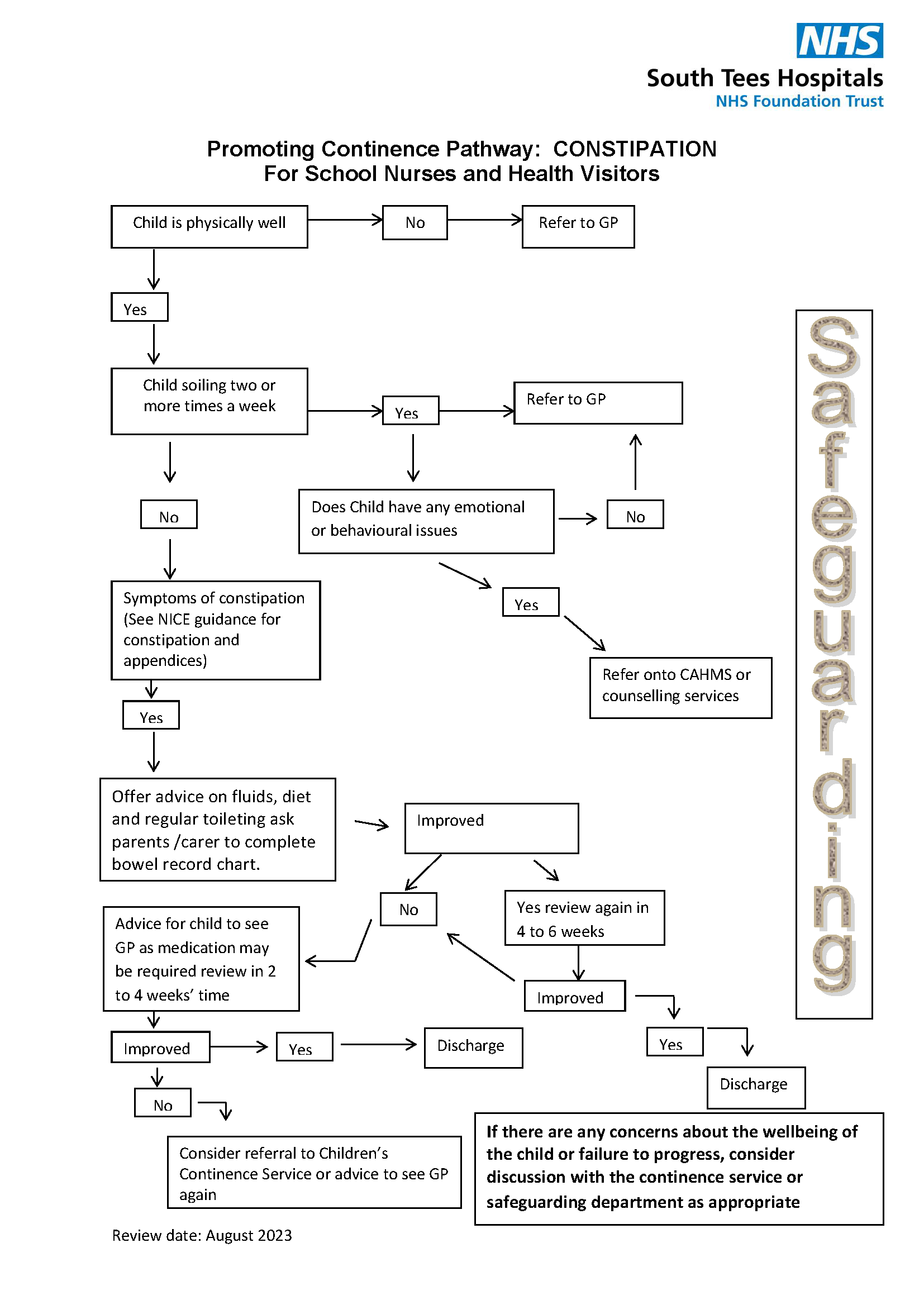
See flow chart.
Additional Resources & Reference
Constipation in Children and Young People NICE clinical guideline 99, 2010.)
Associated Policies
Specialties
Places covered by
- North Yorkshire
Hospital Trusts
South Tees Hospitals