HNY Policy and Pathway Repository - North Yorkshire
Eosinophilia
Definition/Description
Eosinophilia is a peripheral eosinophil count greater than the upper limit of normal range, usually around 0.50 x 10⁹/L.
Red Flag Symptoms
None provided
Guidelines on Management
Causes
- Asthma / atopic dermatitis / acute urticarial
- Infections: especially those due to parasites (most commonly helminthes - hookworm, schistosomiasis - but also giardiasis or other protozoal infections and strongyloides)
- Drugs (penicillin, carbamazepine, sulphonamides are common but any drug is a possible cause)
- Connective tissue disease (rheumatoid arthritis, polyarteritis nodosa, Wegener's granulomatosis)
- Solid malignancy (breast, renal and lung cancer)
- Respiratory disease (Churg-Strauss syndrome, bronchiectasis, cystic fibrosis)
- Myeloproliferative disorders
Referral Criteria/Information
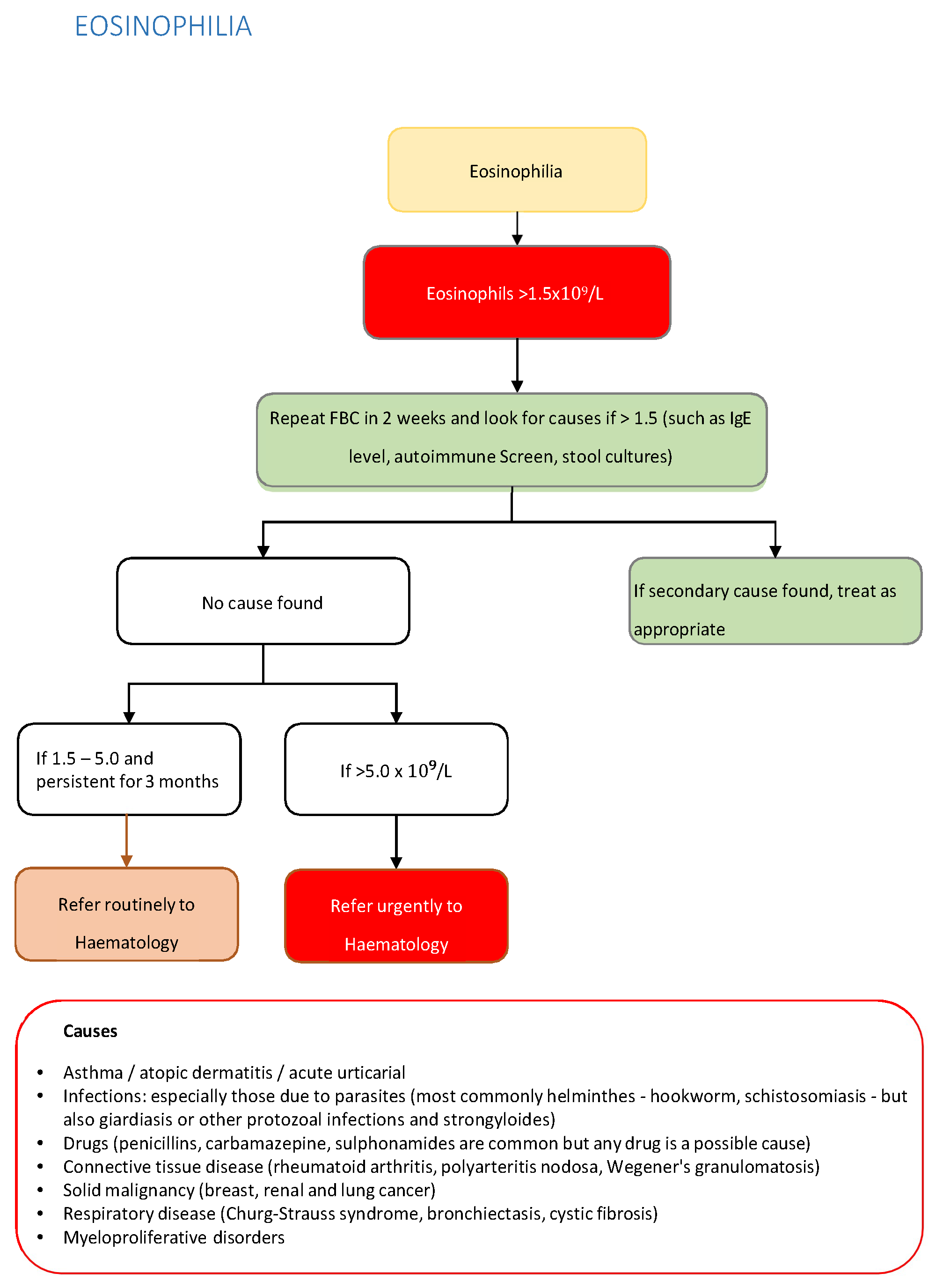
If eosinophils >1.5x10⁹/L repeat FBC in 2 weeks and look for causes if >1.5 (such as IgE level, autoimmune Screen, stool cultures)
- If secondary cause found, treat as appropriate
- If no cause found:
- If 1.5 - 5.0 and persistent for 3 months - refer routinely to Haematology
- If >5.0 x 10⁹/L - refer urgently to Haematology
Associated Policies
There are no associated policies.
Specialties
Places covered by
- North Yorkshire
Hospital Trusts
Harrogate and District
Date created: 17/03/2026, 15:25
Last modified: 17/03/2026, 15:27
Date due for review: 17/03/2028